Genus Nestor, satu-satunya genus bangsa Nestorini, terdiri dari dua spesies bayan dari Selandia Baru dan satu spesies yang telah punah dari Pulau Norfolk, Australia.
Sumber: Lihat artikel asli di Wikipedia
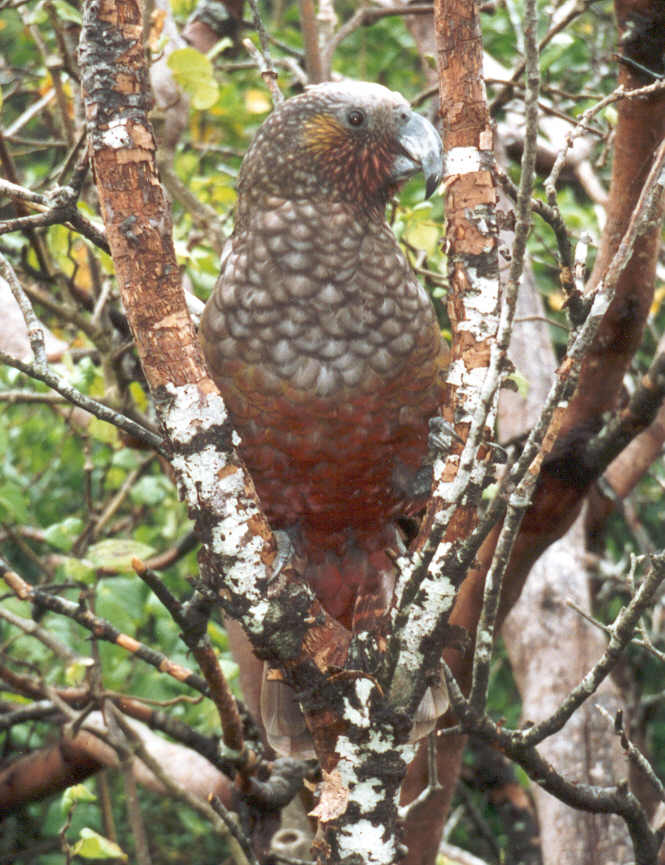
| Nestor | |
|---|---|
 | |
| Kākā (Nestor meridionalis) | |
Klasifikasi ilmiah  | |
| Kerajaan: | Animalia |
| Filum: | Chordata |
| Kelas: | Aves |
| Ordo: | Psittaciformes |
| Famili: | Strigopidae |
| Genus: | Nestor Lesson, 1830 |
| Spesies | |
|
N. notabilis | |

Genus Nestor, satu-satunya genus bangsa Nestorini, terdiri dari dua spesies bayan dari Selandia Baru dan satu spesies yang telah punah dari Pulau Norfolk, Australia.
| Nestorini | |||
|---|---|---|---|
| Common name (binomial name) status |
Image | Description | Range and habitat |
| Kea (Nestor notabilis) |
_-on_ground-8.jpg) |
48 cm (19 in) long. Mostly olive-green with scarlet underwings and rump. Dark-edged feathers. Dark brown beak, iris, legs, and feet. Male has longer bill.[2] | New Zealand: South Island High-level forests and subalpine scrublands 850–1400 m AMSL.[3] |
| South Island Kaka (Nestor meridionalis meridionalis) |
 |
Similar to the North Island Kaka, but slightly smaller, brighter colours, the crown is almost white, and the bill is longer and more arched in males.[5] | New Zealand: South Island Unbroken tracts of Nothofagus and Podocarpus forests 450–850 m AMSL in summer and 0–550 m in winter.[3] |
| North Island Kaka (Nestor meridionalis septentrionalis) |
 |
About 45 cm (18 in) long. Mainly olive-brown with dark feather edges. Crimson underwings, rump, and collar. The cheeks are golden/brown. The crown is greyish.[5] | New Zealand: North Island Unbroken tracts of Nothofagus and Podocarpus forests between 450–850 m AMSL in summer and 0–550 m in winter.[3] |
| Norfolk Kaka |
 |
About 38 cm long. Mostly olive-brown upperparts, (reddish-)orange cheeks and throat, straw-coloured breast, thighs, rump and lower abdomen dark orange.[7] | Formerly endemic on Norfolk Island and Phillip Island of Australia[8] Rocks and trees[7] |
| Chatham Kaka (Nestor sp.) |
Appearance unknown, but bones indicate reduced flight capability. | Only known from subfossil bones.[9] | Formerly endemic on Chatham Island of New Zealand Forests[9] |
| Basis data pengawasan otoritas: Nasional |
|---|
.png) | Artikel bertopik hewan ini adalah sebuah rintisan. Anda dapat membantu Wikipedia dengan mengembangkannya. |